
Every month, our salary reaches our bank account after deducting Tax Deducted at Source (TDS). Most of us glance at the salary slip, check the credited amount, and move on.
Only during the Income Tax Return (ITR) filing season do questions begin to surface.
- Did my employer deduct the correct amount of tax?
- Am I in the right tax regime?
- Can I change my tax regime while filing my return?
- What if I missed submitting my investment proofs?
- Will earning slightly above ₹12 lakh suddenly result in a huge tax bill?
These are common questions, and unfortunately, many taxpayers receive incorrect advice from social media, WhatsApp forwards, or even well-meaning colleagues.
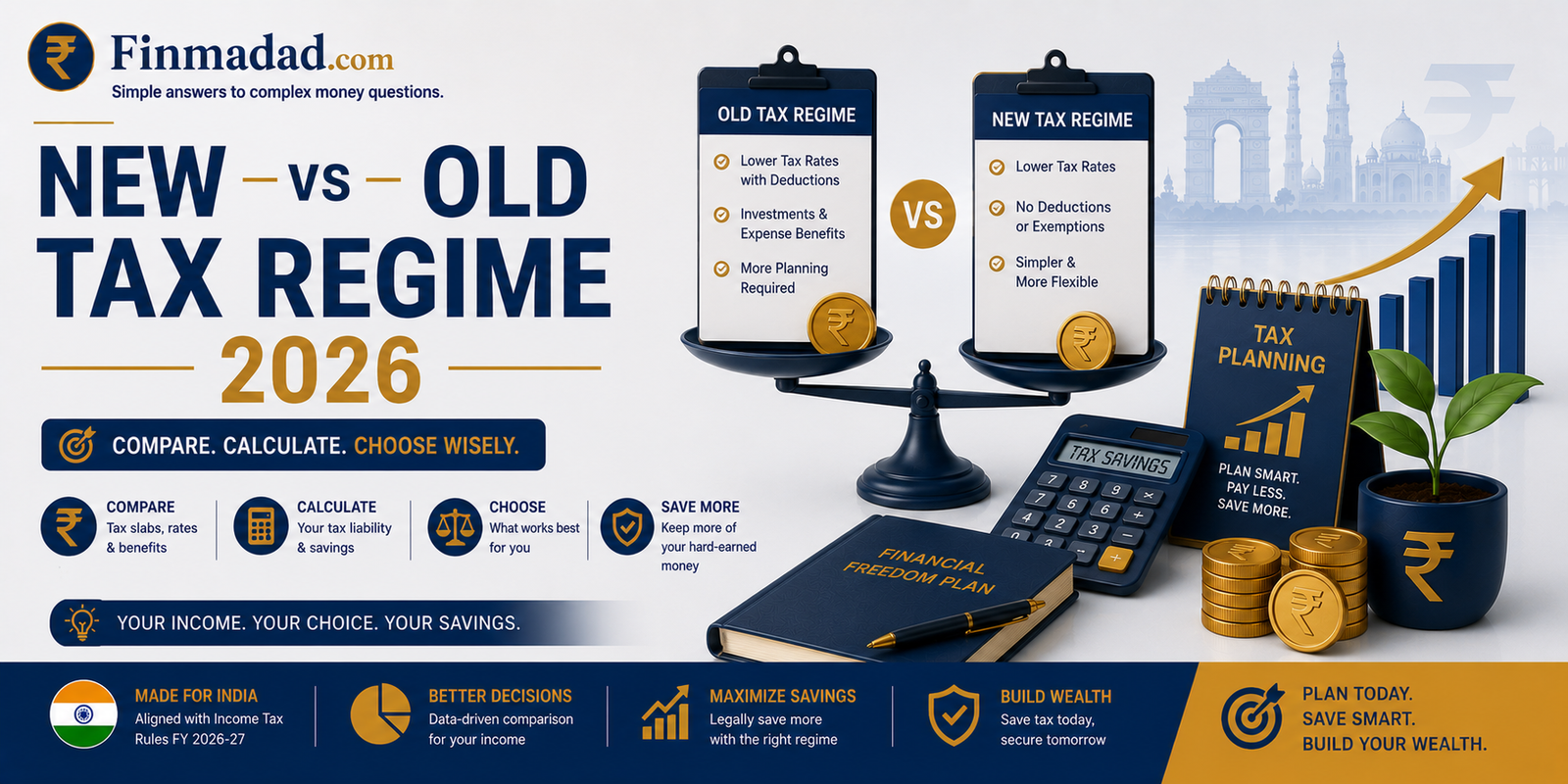
This article explains three important tax rules that every salaried employee should understand before filing an ITR for FY 2026–27 to understand New vs Old Tax Regime 2026
The ₹12 Lakh “Tax-Free Income” Is Often Misunderstood
One of the most common statements you will hear is:
“Income up to ₹12 lakh is tax-free under the New Tax Regime.”
While the statement is broadly correct, the reason behind it is often misunderstood.
The tax slabs under the New Tax Regime still calculate tax on income.
For example:
| Taxable Income | Tax Rate |
|---|---|
| Up to ₹4 lakh | Nil |
| ₹4 lakh – ₹8 lakh | 5% |
| ₹8 lakh – ₹12 lakh | 10% |
| ₹12 lakh – ₹16 lakh | 15% |
| ₹16 lakh – ₹20 lakh | 20% |
| ₹20 lakh – ₹24 lakh | 25% |
| Above ₹24 lakh | 30% |
Suppose your taxable income is exactly ₹12 lakh.
Your tax calculation would be:
- 5% on ₹4 lakh = ₹20,000
- 10% on ₹4 lakh = ₹40,000
Total tax = ₹60,000
So why do many people pay zero tax?
The answer is Section 87A Rebate.
The rebate reduces your tax liability by up to ₹60,000, effectively bringing the tax payable down to zero, provided your income is within the eligible limit under the prevailing rules.
In addition, salaried employees can claim the standard deduction under the New Tax Regime. This is why many salaried individuals with income around this threshold may end up paying no income tax.
The important takeaway is this: your tax becomes zero because of the rebate—not because the tax slabs themselves calculate zero tax.
Crossing ₹12 Lakh Does Not Automatically Mean a Huge Tax Bill
Many taxpayers worry that earning even ₹1 above the rebate limit will suddenly make them liable to pay tens of thousands of rupees in tax.
Fortunately, that is not how the law works.
The Income Tax Act provides Marginal Relief in eligible situations.
The purpose of marginal relief is simple:
Your additional tax should not exceed your additional income over the rebate threshold.
Example
Suppose your taxable income is:
₹12,05,000
Without marginal relief, losing the rebate could result in a much higher tax liability than the additional ₹5,000 earned.
Marginal relief ensures that this does not happen.
The tax system automatically limits the tax impact so that earning a little more never leaves you financially worse off than earning slightly less.
Many people panic when their income crosses a threshold and end up buying insurance or investment products purely to “save tax.”
Before making any such decision, understand whether marginal relief already protects you.
Your Employer’s TDS Is Not the Final Tax Calculation
Every year, employers ask employees to declare investments and submit supporting documents.
Many people miss the deadline.
The immediate fear is:
“HR has already deducted extra tax. Have I permanently lost my money?”
The answer is No.
Your employer deducts TDS based on the information available at that time.
However, your final tax liability is determined only when you file your Income Tax Return.
During ITR filing, you can:
- Choose the applicable tax regime (subject to eligibility).
- Declare eligible deductions and exemptions.
- Report the correct income.
- Calculate your actual tax liability.
If your employer deducted more tax than required, the excess amount is generally refunded by the Income Tax Department after your return is processed.
This is why filing your ITR correctly is extremely important.
Can You Switch Between the Old and New Tax Regime?
This depends on the nature of your income.
If You Are a Salaried Employee Only
If your income consists only of salary and other eligible non-business income, you generally have the flexibility to choose the tax regime each financial year while filing your return.
If You Have Business or Professional Income
The rules are different.
If you have business or professional income, your choice of tax regime is subject to specific conditions under the Income Tax Act. In such cases, Form 10-IEA may also become relevant if you wish to opt out of the default regime. Because these rules can have long-term implications, it is advisable to review the latest tax provisions or consult a qualified tax professional before making your choice.
Which Tax Regime Should You Choose?
There is no single answer that suits everyone.
As a general guideline:
The New Tax Regime may be more suitable if:
- You have limited deductions.
- You do not pay home loan interest.
- You do not claim HRA exemption.
- You prefer a simpler tax filing process.
The Old Tax Regime may still be beneficial if you claim significant deductions, such as:
- Section 80C investments
- Home loan interest
- House Rent Allowance (HRA)
- Additional NPS contribution
- Health insurance premiums
Instead of relying on assumptions, use the official Income Tax Department’s tax calculator to compare both regimes using your actual income and deductions.
Common Mistakes Salaried Employees Make
- Assuming the New Tax Regime always results in lower tax.
- Believing income up to ₹12 lakh is tax-free because of the tax slabs.
- Panicking when income slightly exceeds the rebate threshold.
- Missing investment declaration deadlines and assuming the excess TDS is permanently lost.
- Choosing a tax regime without comparing both options.
Final Thoughts
Choosing between the Old and New Tax Regime is no longer a one-time decision. It is something every salaried employee should evaluate each year based on their income and eligible deductions.
Remember these three key points:
- Zero tax up to the eligible limit is due to the Section 87A rebate, not because the tax slabs calculate zero tax.
- Marginal relief prevents a small increase in income from resulting in a disproportionately large increase in tax liability.
- Your employer’s TDS is only a provisional deduction. Your final tax is calculated when you file your Income Tax Return.
Spending a few minutes understanding these rules can help you avoid confusion, unnecessary panic, and potentially costly financial decisions.
Related Articles on FinMadad
If you’re preparing to file your Income Tax Return, you may also find these guides useful: