
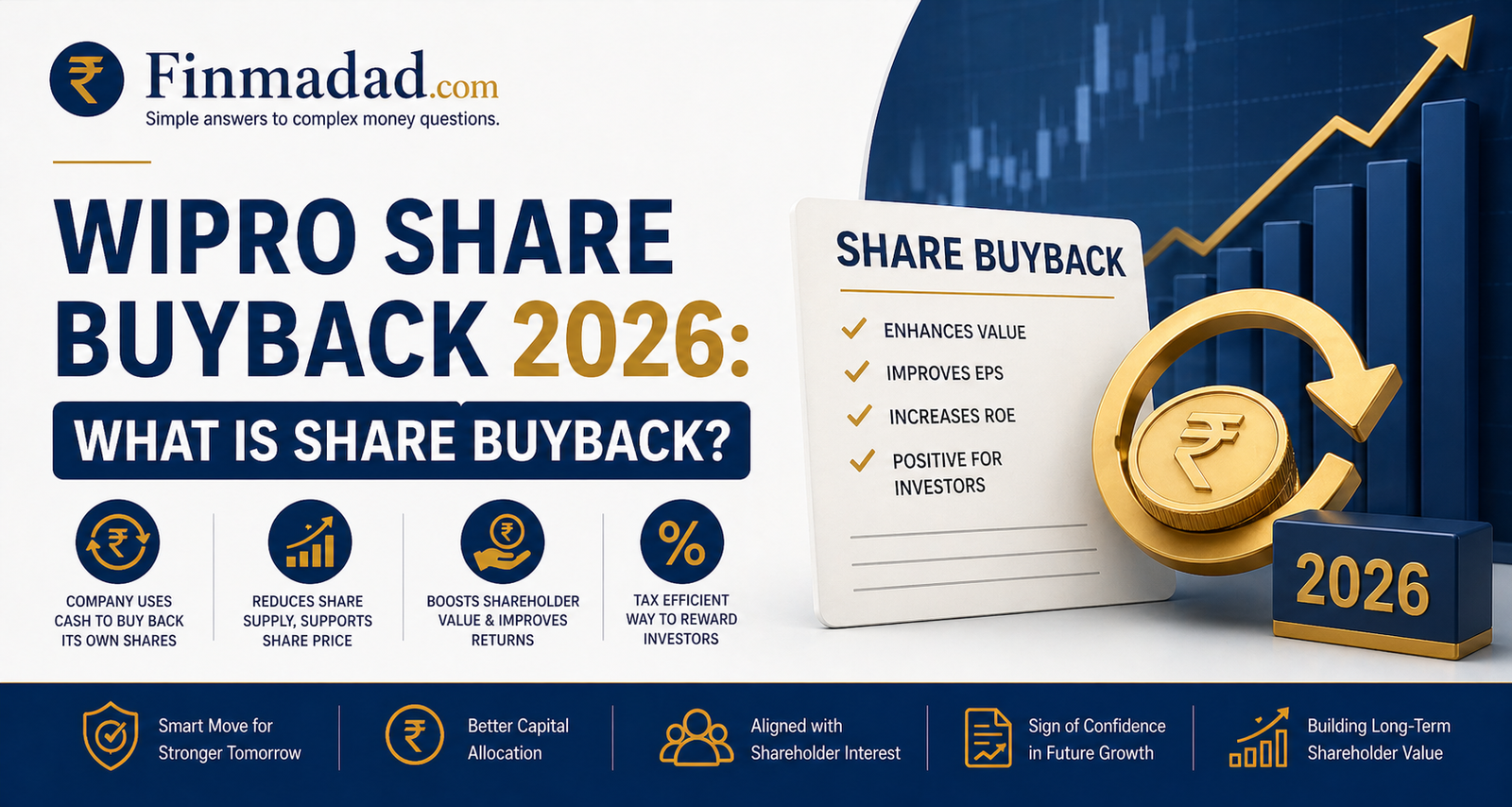
If you hold Wipro shares in your demat account, your inbox probably just got a very interesting notification. Wipro has officially announced a Share Buyback for 2026, and the numbers are hard to ignore.
The company has set the buyback price at INR 250 per share—a premium over the current market rate. As on closing of business hours on 16th April 2026, Wipro was trading at 210.15 in NSE. Company has not yet announced the record for share buyback. Watch out for the record date announcement in NSE or BSE website. You must hold shares on Record date to be eligible to be participated in the buyback. If you’re a fellow investor, you’re likely asking: What is share buyback? Is this a good deal? How much tax I will lose to the government?
This will be a long post. Below is the table of contents for this topic:
What exactly is a Share Buyback?
Think of a buyback as the opposite of an IPO. Instead of selling new shares to the public to raise money, the company uses its own cash to buy back shares from existing shareholders like us.
In the market, you’ll often hear this called “Capital Repayment” or “Share Repurchase.” Essentially, the company is saying, “We have extra cash, and we believe our own stock is a great investment.”
Why does a company like Wipro do this?
Companies don’t just buy back shares to be nice to investors. There are three simple “system upgrades” they are trying to achieve:
-
To improve Earnings Per Share (EPS): With fewer shares in the market, the profit per share automatically goes up.
-
To return excess cash: If the company doesn’t have a massive new project to fund, they return that “idle” cash to the shareholders.
-
To show confidence: A buyback at a premium often signals that the management believes the stock is currently undervalued by the market.
What are the Tax Implications? (The Part That Matters!)
The Union Budget 2024-25 significantly overhauled capital gain tax. Key changes including raising the LTCG tax rate to 12.5% (from 10%) and STCG to 20% (from 15%) on listed equities while removing indexation benefits for long term assets. The tax exemption limit for LTCG increased to INR 1.25 Lacs per Tax Year.
When you tender your shares in a buyback, the “Gain” (Buyback Price minus your Purchase Price) is treated as Capital Gains.
Example: Your Tax Math
For this example, I am taking hypothetical numbers to explain the concept clearly. The actual buyback price is INR 250.
Let’s say you bought 100 shares of Wipro at INR 200 and you tender them at the buyback price of INR 300.
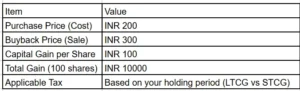
LTCG vs. STCG?
The amount you pay depends on how long you held those shares in your demat account before the buyback.

A Note From Me
I am not a tax consultant or a SEBI registered advisor. I am a fellow taxpayer and investor who tries to navigate these systems myself and shares what I learn in plain language so others do not have to struggle alone. Everything here is based on my own research and experience with the current Wipro announcement. If you found this useful, please subscribe to the Finmadad newsletter— I write plain-language personal finance guides for Indian investors. No jargon, no spam, just honest practical information.
What’s your move?
Are you planning to tender your Wipro shares or hold them for the long term? Please check with your financial advisor before taking any decision.
Watch the Video: I have posted a quick 2 Minute breakdown of Wipro time line in my YouTube Channel. Wipro Share BuyBack.
Subscribe: If you found this breakdown useful, please subscribe to FinMadad using the form in the sidebar. I write plain-language guides for Indian investors—no jargon, just honest information.
Questions? Drop them in the comments below! I’d love to hear how you’re calculating your gains.