
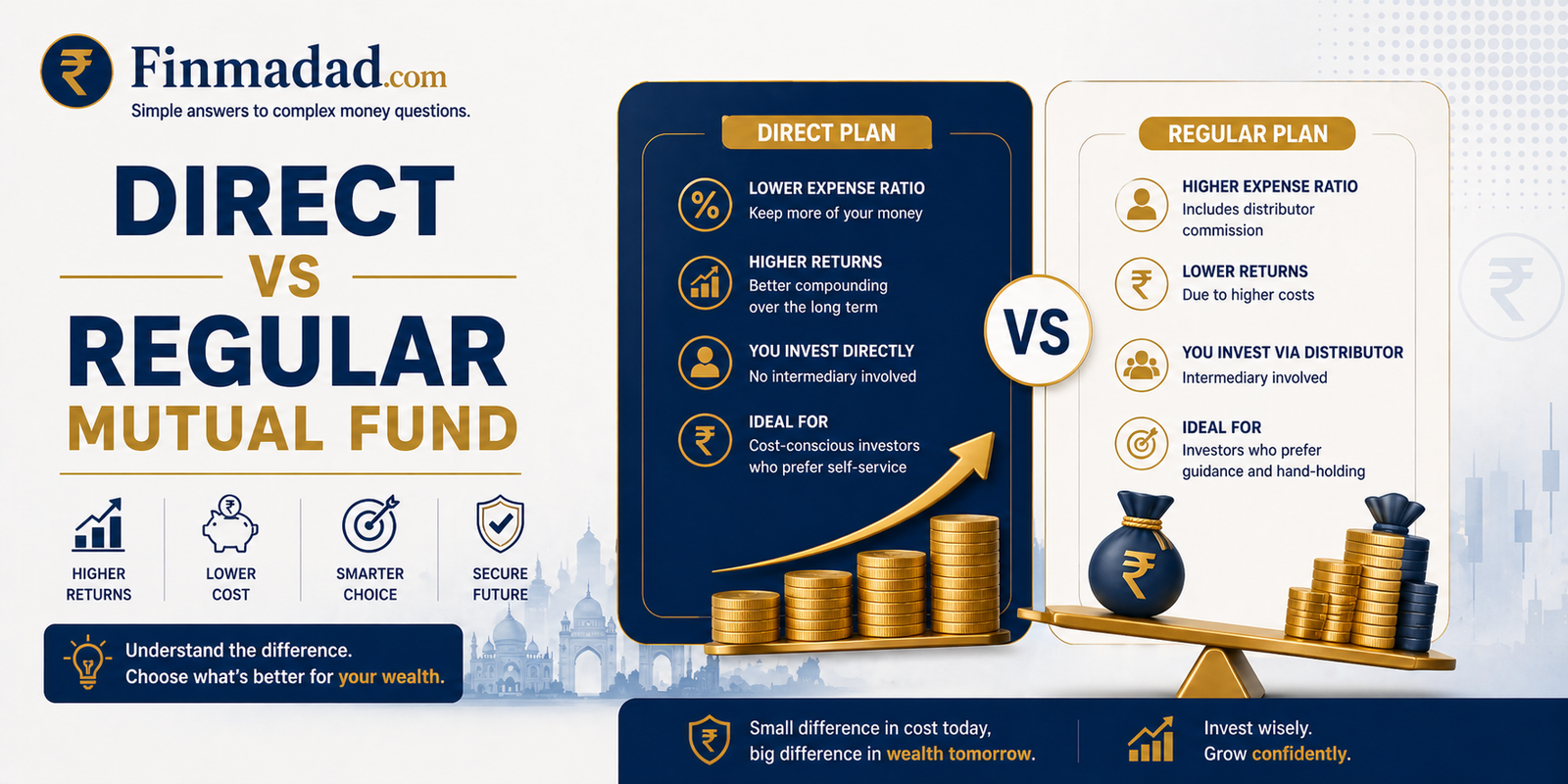
Choosing between a Direct and Regular plan is the most impactful decision you can make for your mutual fund portfolio. While both plans invest in the exact same stocks and bonds, the way you pay for them is fundamentally different—and in 2026, the stakes have never been higher.
As of April 1, 2026, SEBI has introduced the Base Expense Ratio (BER), a new rule that forces mutual funds to show you exactly what you are paying for.
1. The Core Difference: Who is getting paid?
-
Regular Plan: You buy through a middleman (distributor, broker, or bank). The fund house pays them a “commission” for bringing you in. This commission is taken out of your investment every single day.
-
Direct Plan: You buy directly from the fund house (AMC). There is no middleman and no commission. Because the costs are lower, more of your money stays invested to grow.
2. The 2026 SEBI “BER” Update
Before 2026, all costs were bundled into one “Total Expense Ratio” (TER). Now, SEBI requires a split:
Total Cost = Base Expense Ratio (BER) + Brokerage + Statutory Levies
The new 0.90% cap on BER for Index Funds has made Direct plans even more attractive for cost-conscious investors.
3. The “Wealth Gap”: Why 1% Matters
A 1% difference in fees sounds small, but over 20 years, it creates a massive gap in your final wealth.
-
Investment: ₹10 Lakhs (Lump sum)
-
Duration: 20 Years
-
Scenario A (Regular): 1.5% Fee → Final Value: ₹61.3 Lakhs
-
Scenario B (Direct): 0.5% Fee → Final Value: ₹74.1 Lakhs
The Result: Choosing the Regular plan cost you ₹12.8 Lakhs in lost gains.
4. How to Choose?
Choose a Direct Plan if:
-
You are comfortable using an app or website to invest.
-
You do your own research or use an independent advisor.
-
You want to maximize every rupee of your long-term wealth.
Choose a Regular Plan if:
-
You are a beginner and need a “hand-holding” service for paperwork.
-
You don’t have the time to track your portfolio or rebalance it.
-
Your distributor provides valuable tax planning or goal-setting advice.
Before You Switch
If you decide to move from Regular to Direct, remember that switching is a “Sale.”
-
Exit Load: You might have to pay a fee if you switch within the first year.
-
Capital Gains Tax: In 2026, you can book up to ₹1.25 Lakh of profit tax-free every year. Plan your switch across multiple years to save on taxes.
-
How Much Does the Difference Actually Cost You Over Time?
Frequently Asked Questions
Is direct plan always better than regular plan?
For self-directed investors who do their own research, yes — direct plans always give
higher returns because the expense ratio is lower.
The only exception is if you are working with a SEBI-registered investment advisor (RIA)
who charges a flat fee — in that case, regular plans through an RIA can still be worth it
if the advisor adds genuine value.
Can I switch from regular to direct plan without selling?
No. Switching requires redeeming from regular plan and buying the direct plan —
it is treated as a sale for tax purposes.
There is no in-kind transfer option available in India currently.
Is the NAV of direct plan higher than regular plan?
Yes, always. Because direct plans have lower expense ratios, more of the fund’s returns get added to the NAV every day.
Over time this difference compounds significantly. A higher NAV in direct plan does not mean it is more expensive,
it means it has grown more. Do not let a higher NAV number discourage you.
A Note From Me
If you found this useful, please subscribe to the Finmadad newsletter— I write plain-language personal finance guides for Indian investors. No jargon, no spam, just honest practical information.
Related Posts
What is NAV in Mutual Funds and Why You Should Not Worry About It
What is XIRR and Why Your Mutual Fund App Shows It
How to Start Investing in Mutual Funds in India